Scientific Data Browser
Code Ocean
The Product
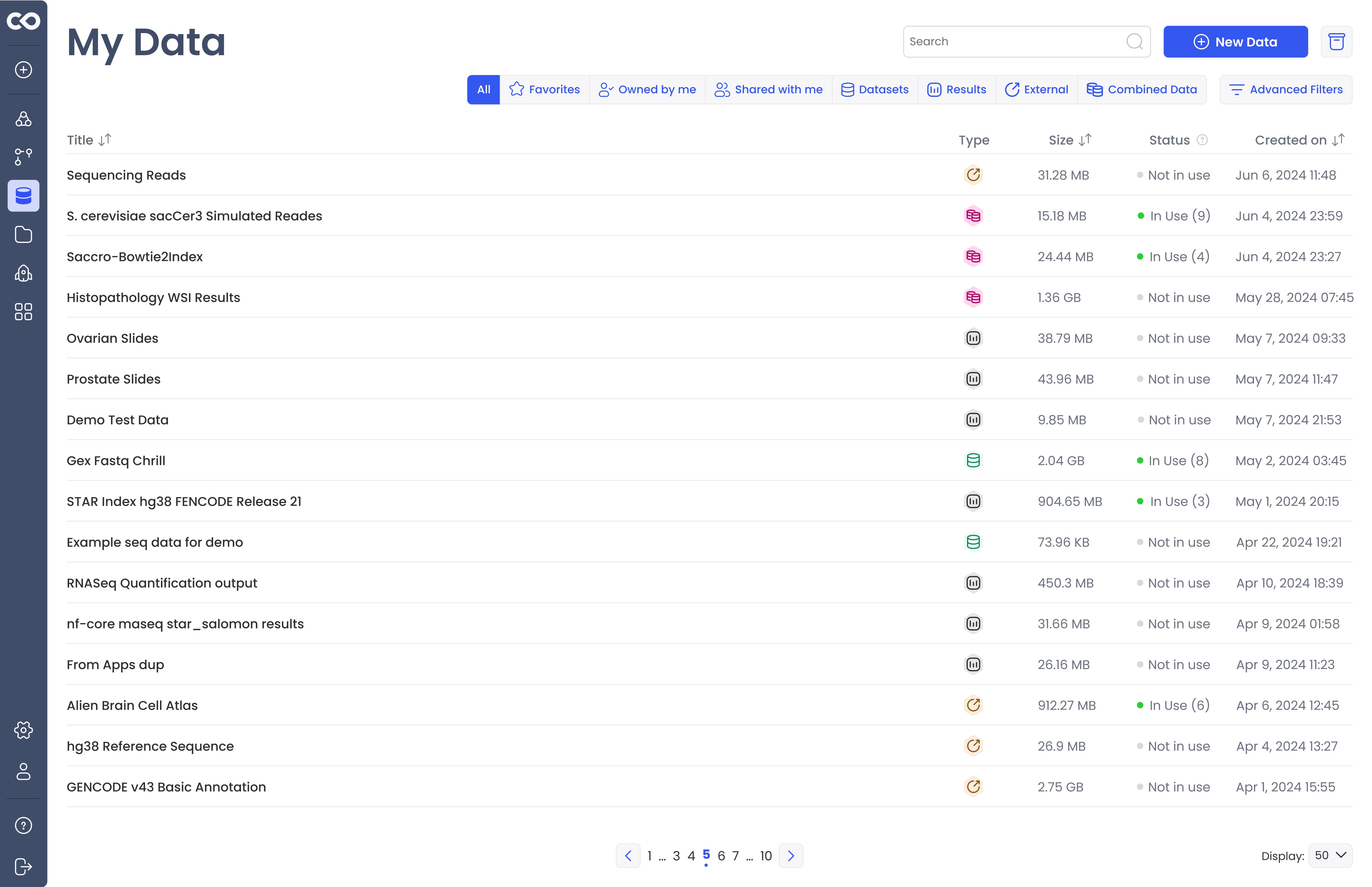
Code Ocean empowers computational scientists to run, reproduce, and share scientific analyses. The Datasets are a fundamental part of the computational process execution and the delivery of reproducible results.
The goal is to reduce time-to-find and time-to-validate datasets while increasing confidence in reuse.

The Process
The Challenge
Description-heavy rows kill scanability
High context-switching cost
No metadata hierarchy or comparison layer
Weak refinement model
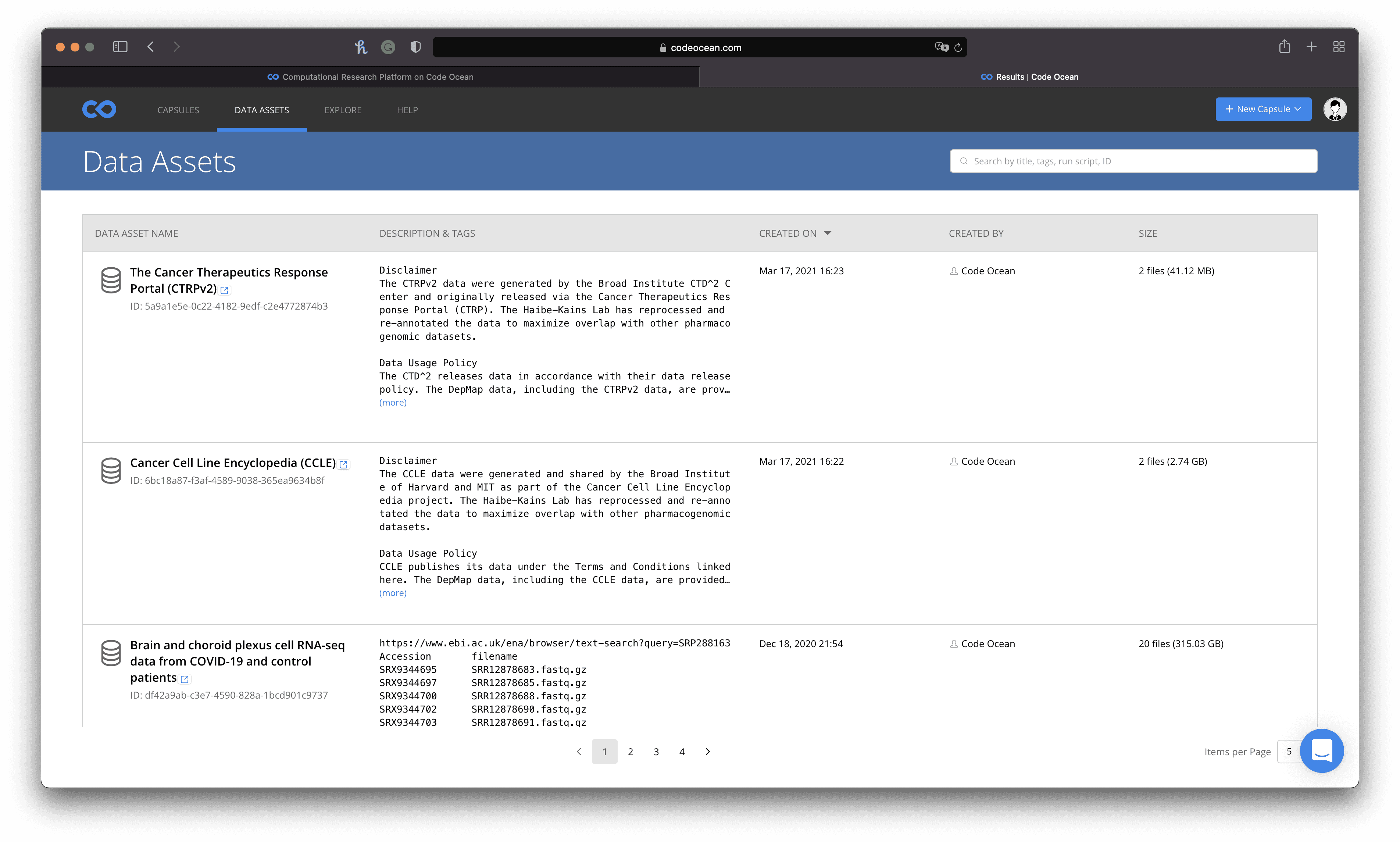
“I feel I spend too much time jumping between pages to find the right dataset for my project.”
— Data Scientist, Bioinformatics Team
The Research

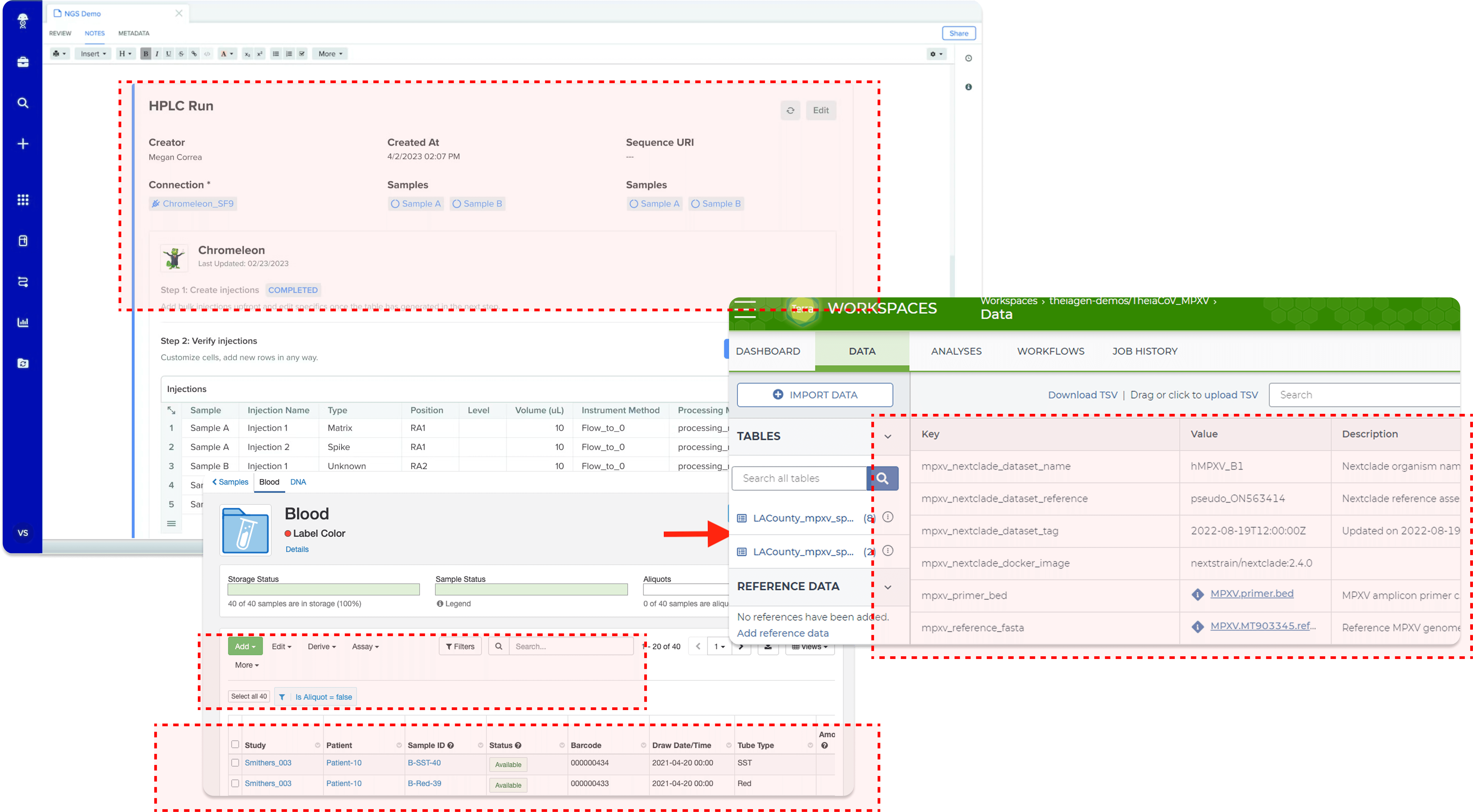
Competitive Benchmarking
Competitive Benchmarking

User Interviews
User Interviews

Heuristic Analysis
Heuristic Analysis
Findings
Metadata-driven filtering is standard; free-text browsing is secondary
Faceted filters with counts reduce noise and speed narrowing
Table-based comparison enables faster triage than description-heavy lists
Saved views, cohorts, and reusable selections accelerate workflows
Provenance is part of discovery, not just audit/compliance
Context switching (open → back → open) slows validation loops
Scalable systems support column customization and bulk actions
Takeaways & Goals
Table-based > description-heavy lists
Progressive Disclossure
Provenance is part of discovery
Context switching
The Design
Principles
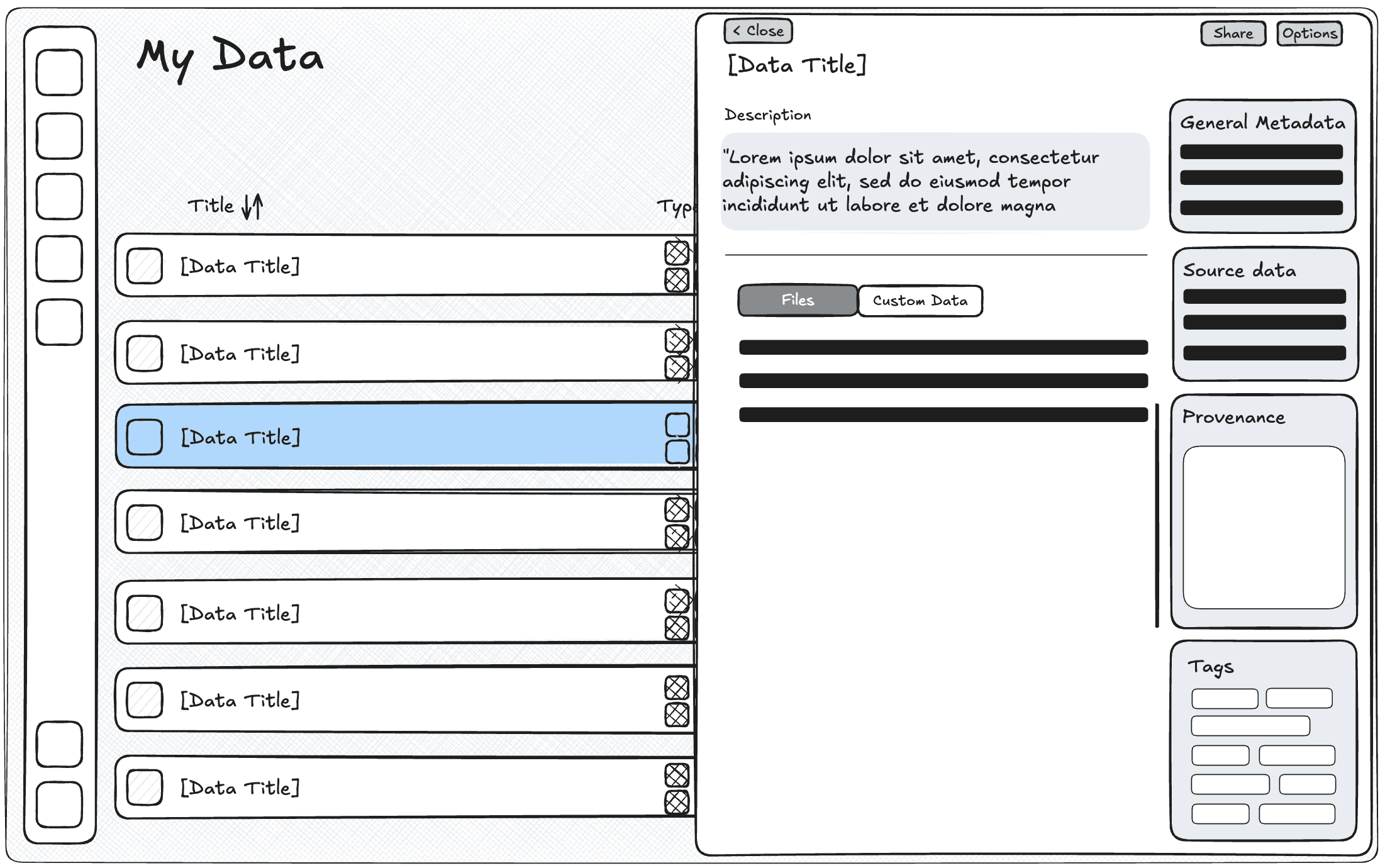
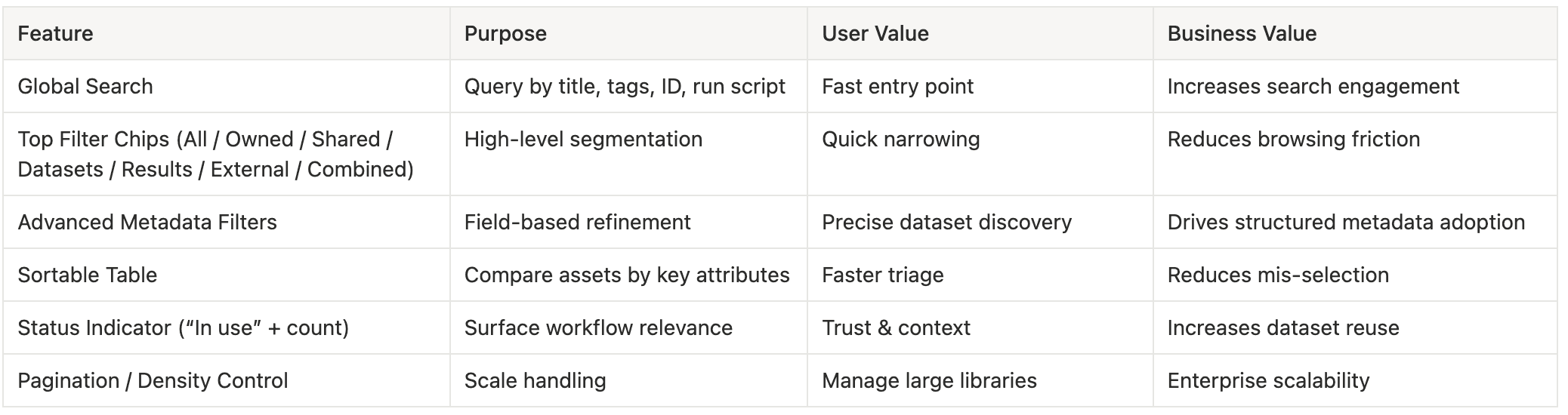
Architecture
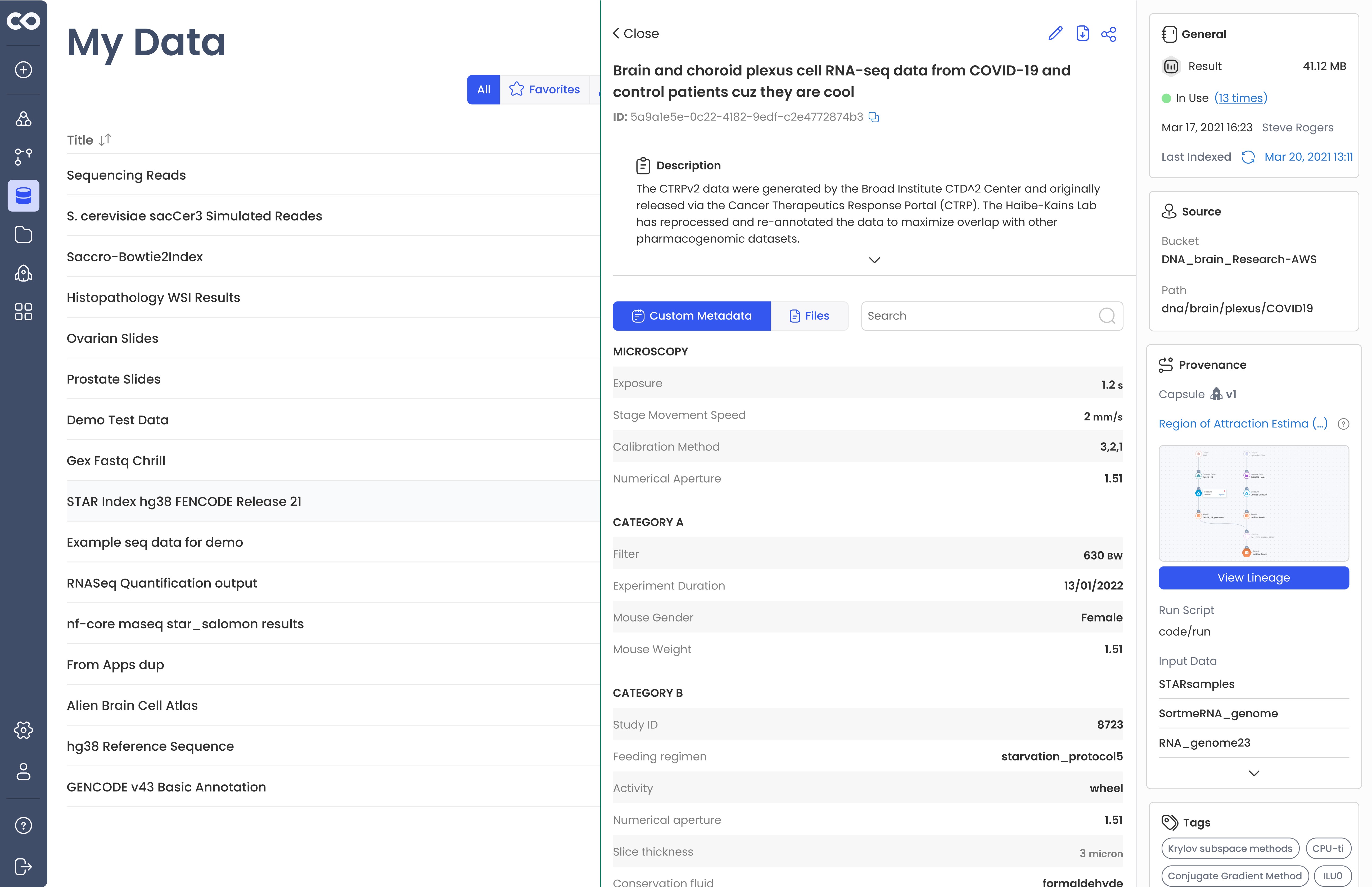
Disovery/Browse Layer
Details Layer
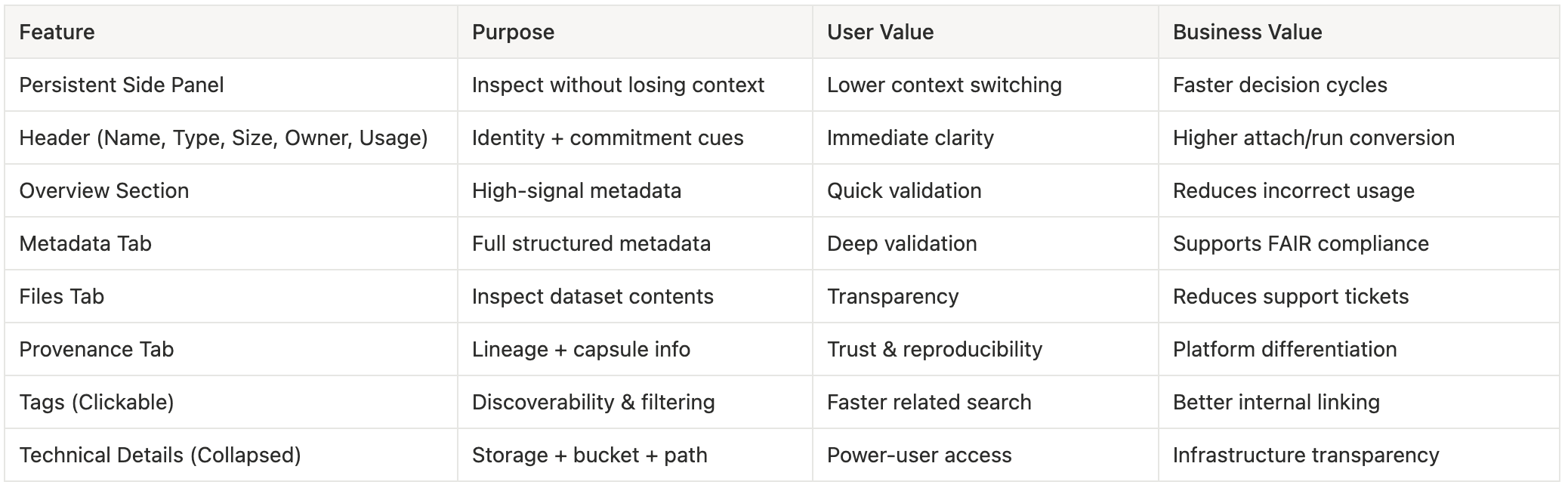
Solution Overview
Visual Vocabulary
Calm Overview + Expandable Depth
Role -Friendly
Real-Time Synchronization
Validation & Outcomes
Results from Usability Sessions
60% ↑
Faster time-to-identify dataset
25% ↑
Increase in “In use” assets
Impact aligns user value (speed + trust), with business value (activation + reuse).
Reflection
This project shifted my thinking from “cleaning up a list UI” to redesigning a discovery system.
The real problem wasn’t visual noise, it was workflow friction.
By reframing discovery as a structured loop (refine → compare → commit), the solution became architectural rather than cosmetic.
The biggest insight: in scientific platforms, trust signals are not secondary, they are part of relevance.
This project reinforced that in complex systems, clarity is not about reducing information, it’s about structuring it so users can move with speed, confidence, and intent.
Thankyou :)
“Good design is obvious. Great design is transparent.”
— Joe Sparano