App Store Navigation Redesign
Overwolf
The Product
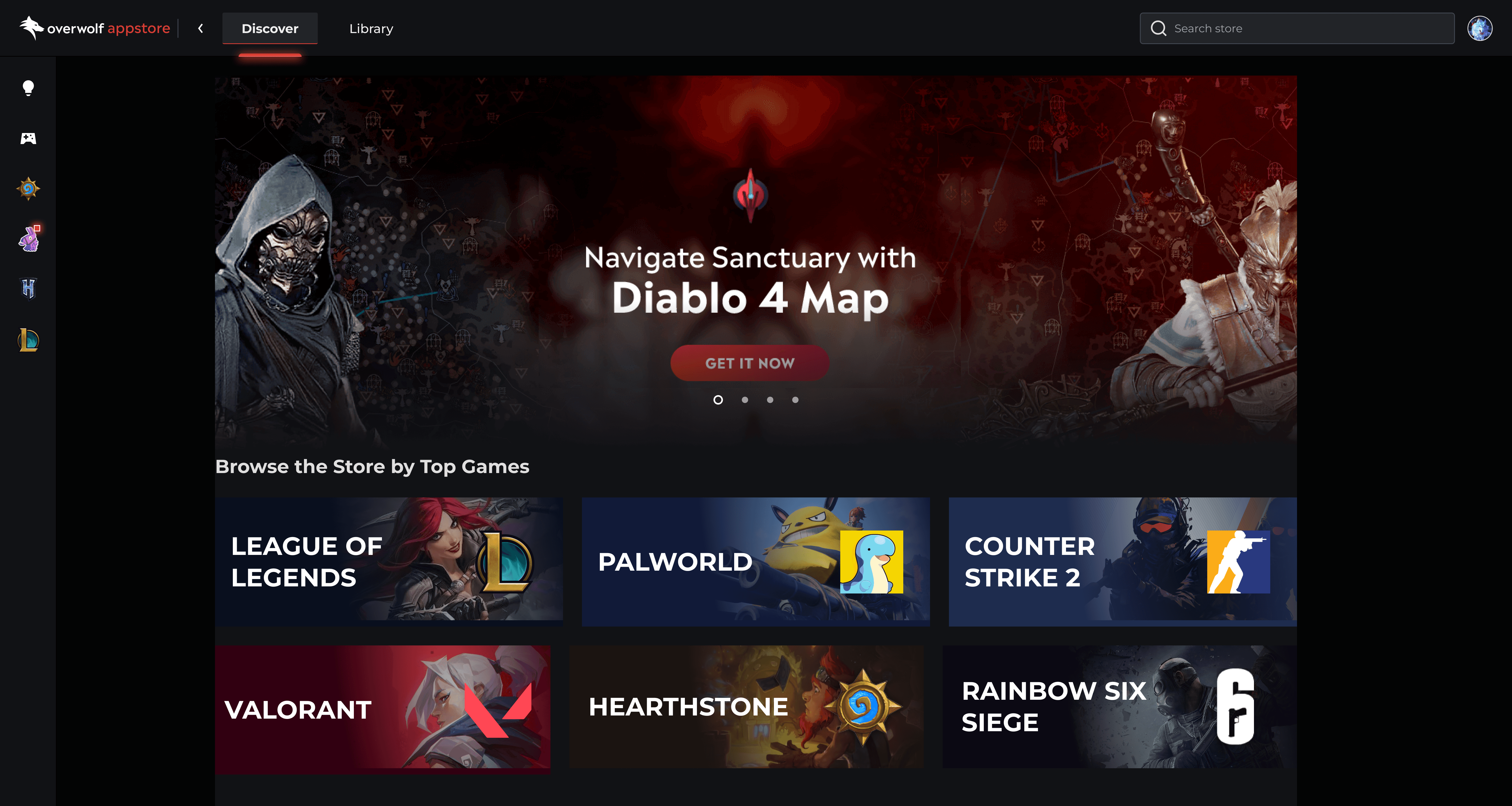
Overwolf Appstore is a desktop-first marketplace for discovering and managing in-game companion apps.
It serves gamers looking for tools that enhance the games they play, and developers seeking visibility for their apps across supported titles.
This project redesigns the Appstore’s navigation and discovery experience.

The Process
The Challenge
Not Intent-Centric
No Perzonalization
Wrong Focus
Generic Experience
“I just want to see the apps that I can actually use with my games. Everything else is just a waste of time.”
— P.C. Gammer
The Research

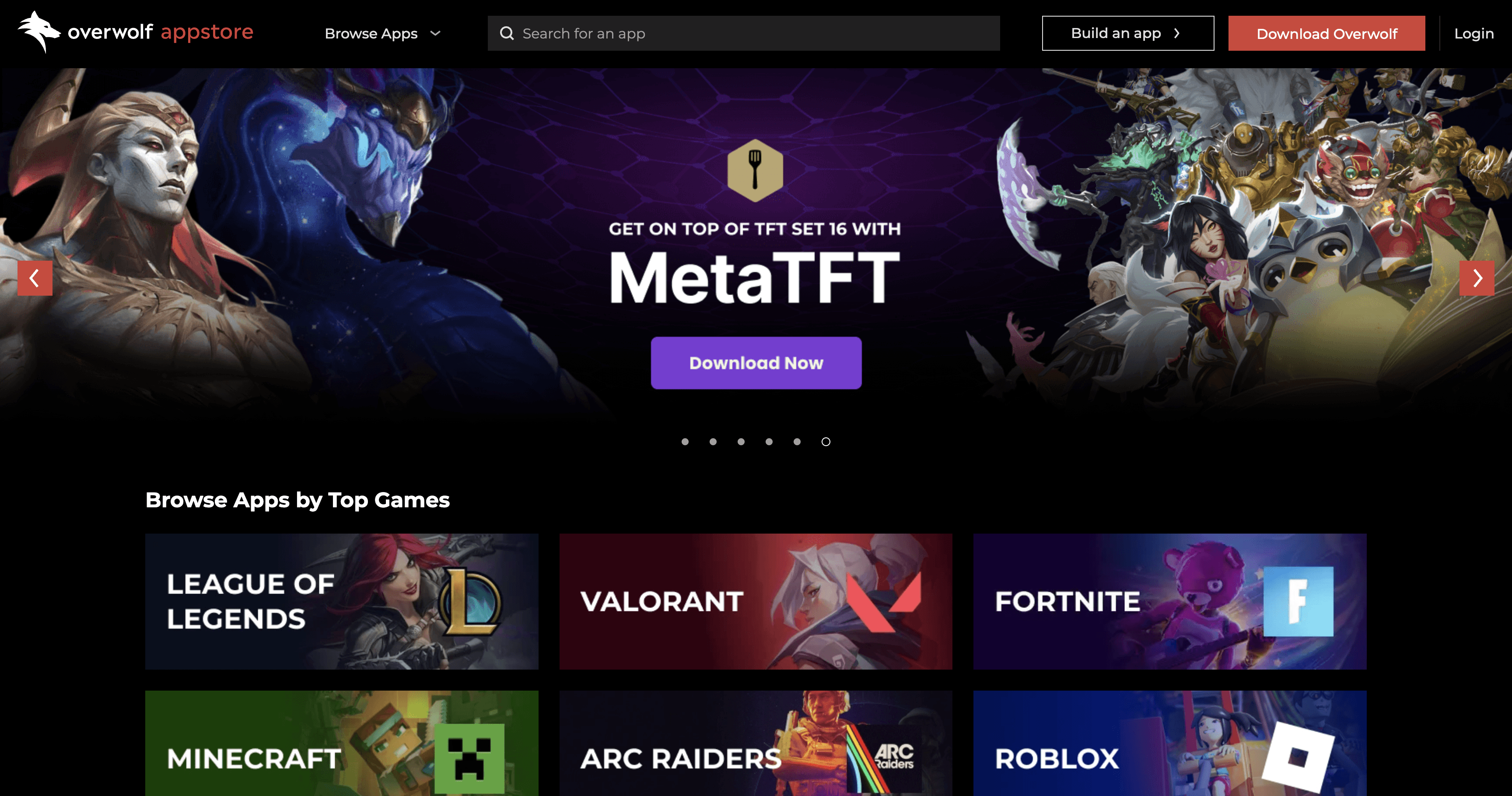
Benchmark Patterns

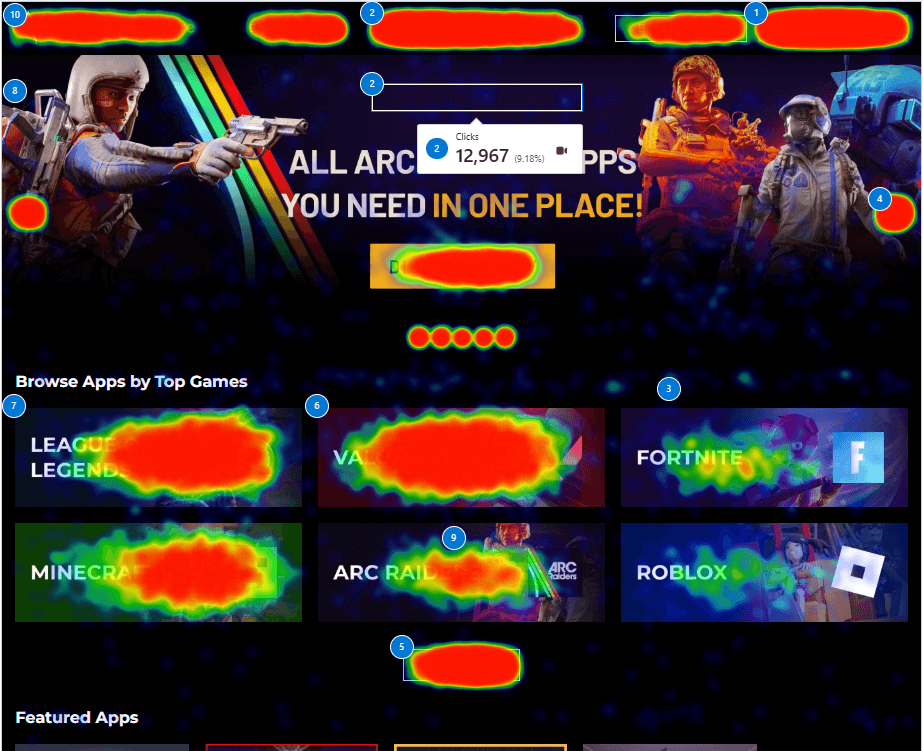
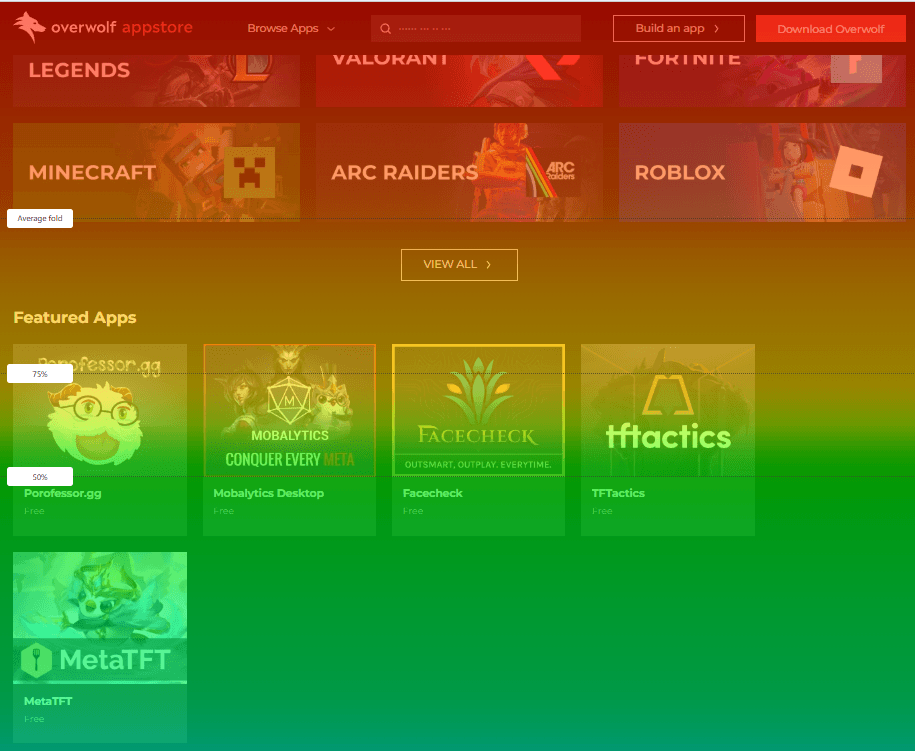
User Behavior Analysis

Funnels & Interactions
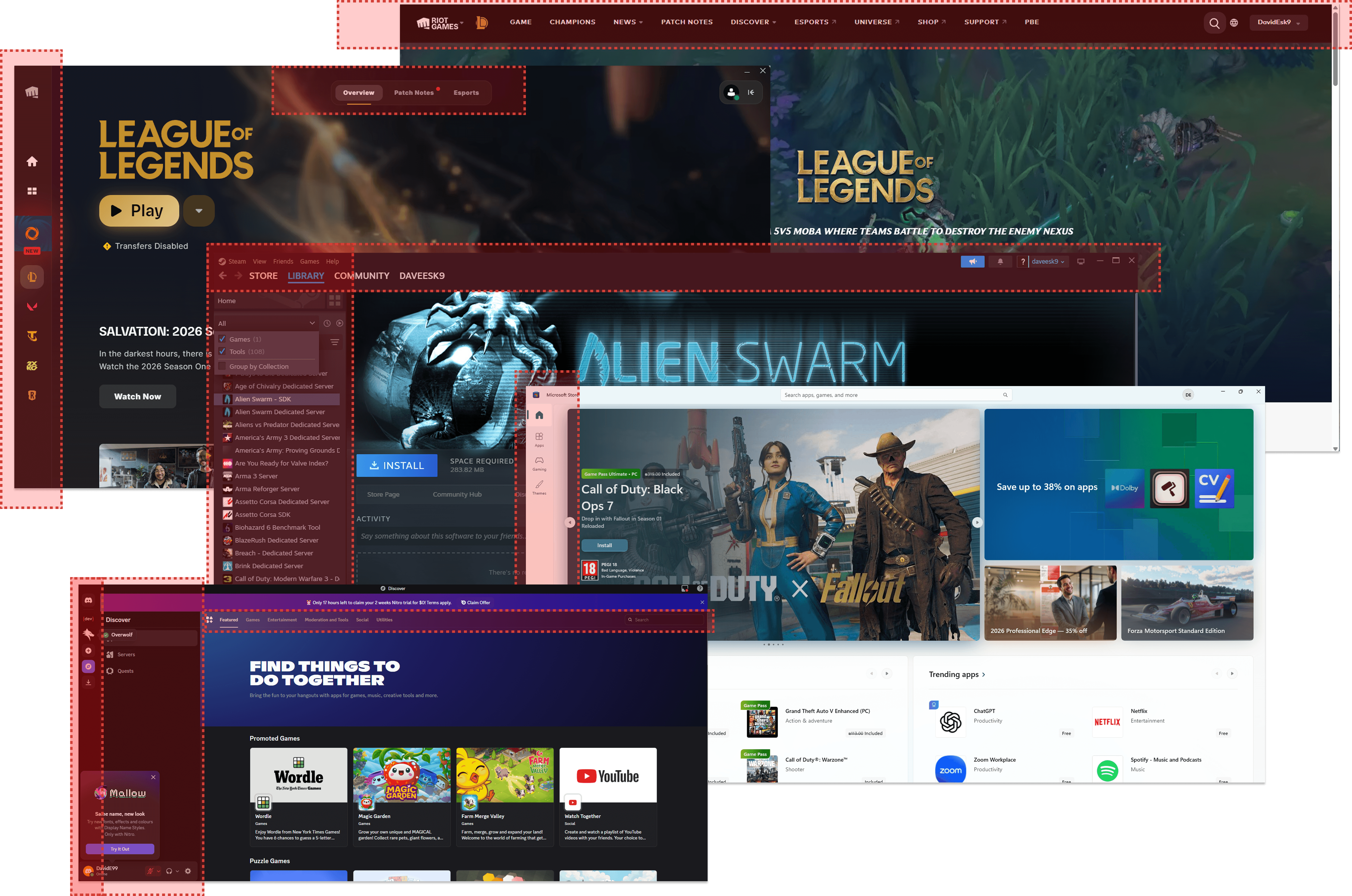
Findings, Facts & Takeaways
90%
of users have 2 apps installed
256
Available Apps
Speed, Relevance, and Familiarity over Exploration
Game-First, then app
Less Choice, More Guiding
Personalized Experience
The Design
Principles
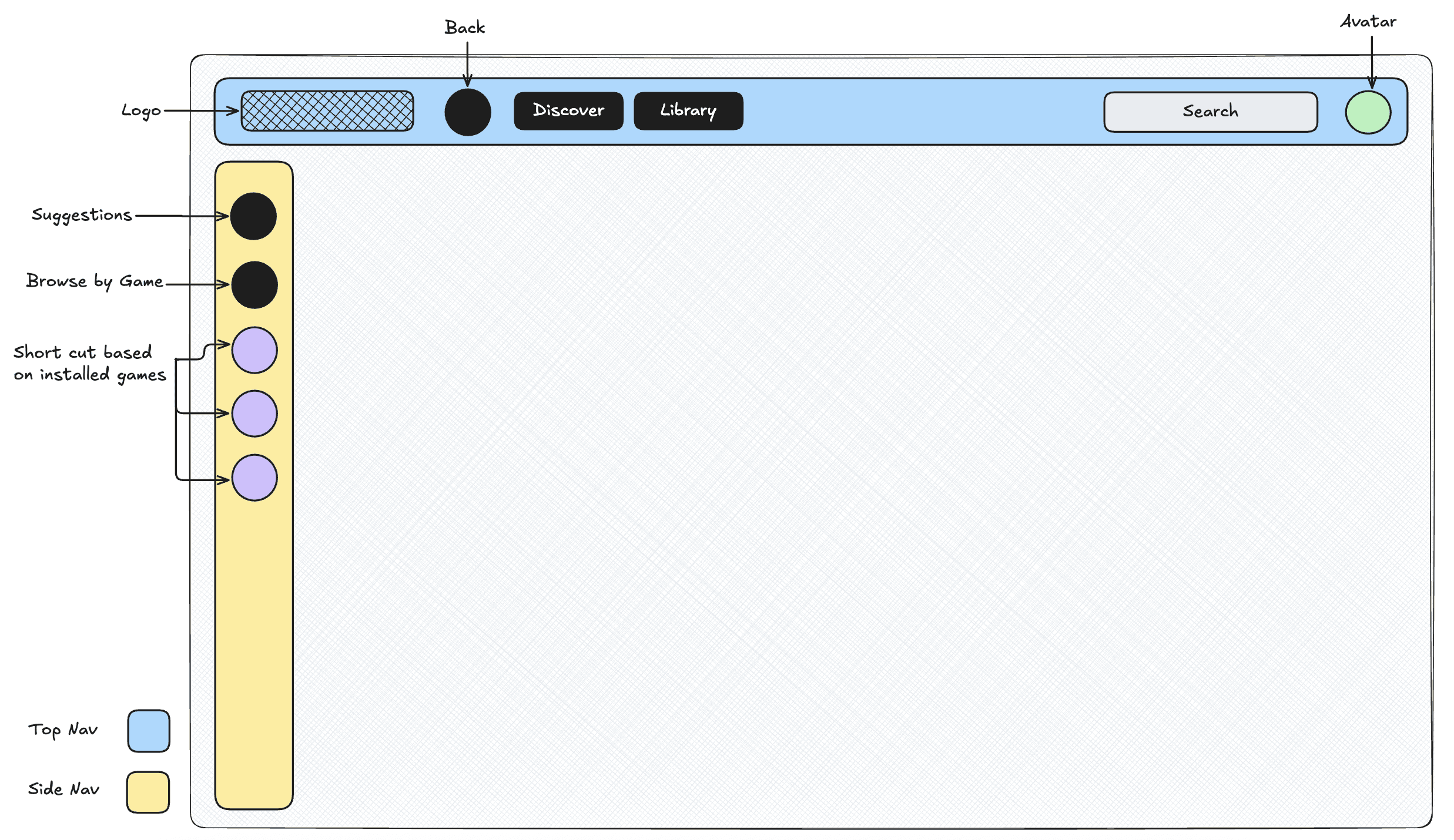
Architecture
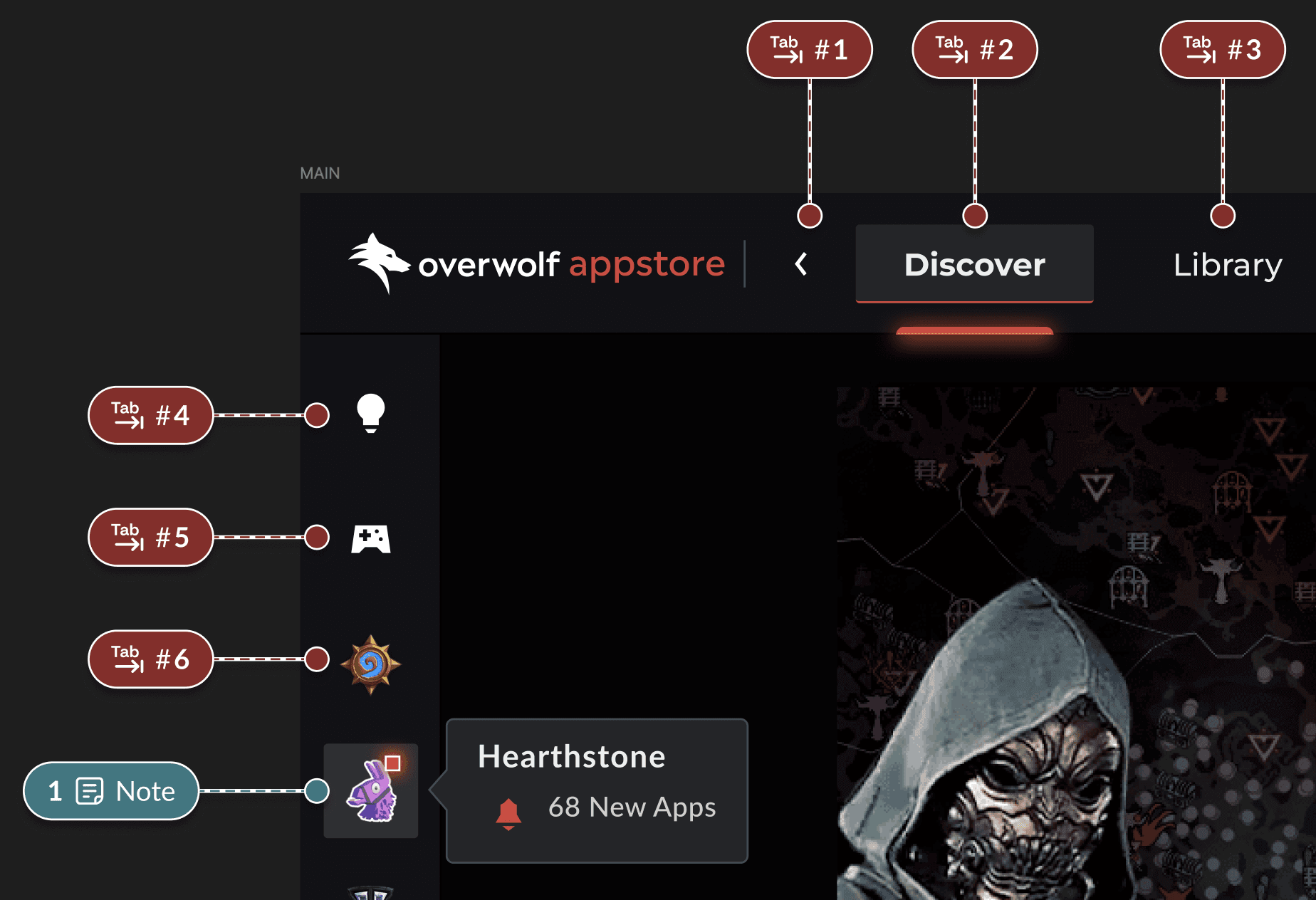
Top navigation:
Company Logo
"Back" button (iframe adoption)
Discover -> Landing page
Games (Uncommitted Users only)
Library -> Sing Up or App Manager
Compact Search
Profile
Side navigation:
Suggested Apps
App Browsing by game
Short-Cut Filters by installed game
Notifications & Updates by game
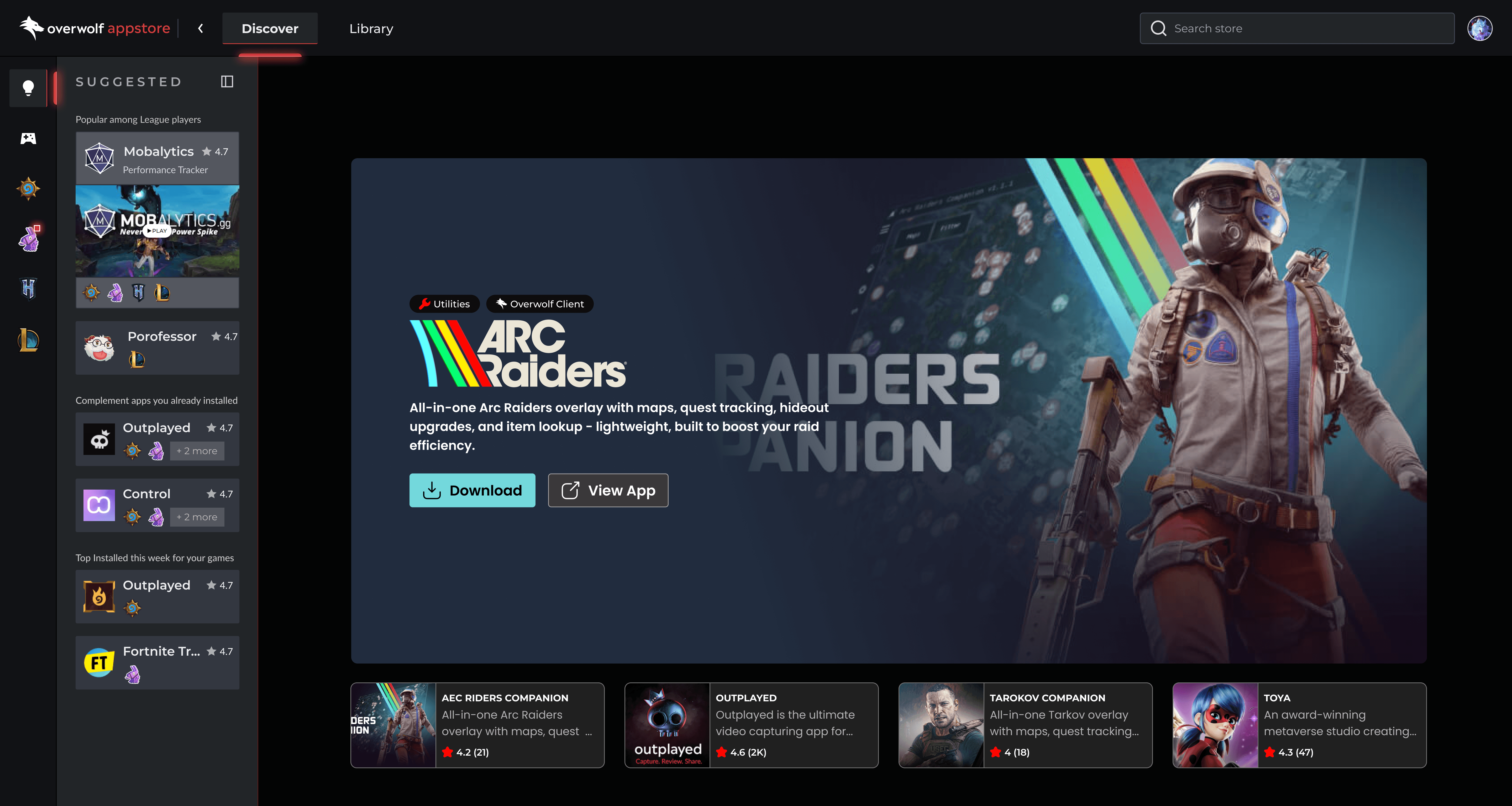
Solution Overview
The solution introduces personalized, game-driven navigation that reduces browsing friction and improves discovery relevance, taylored for a small-sized store.
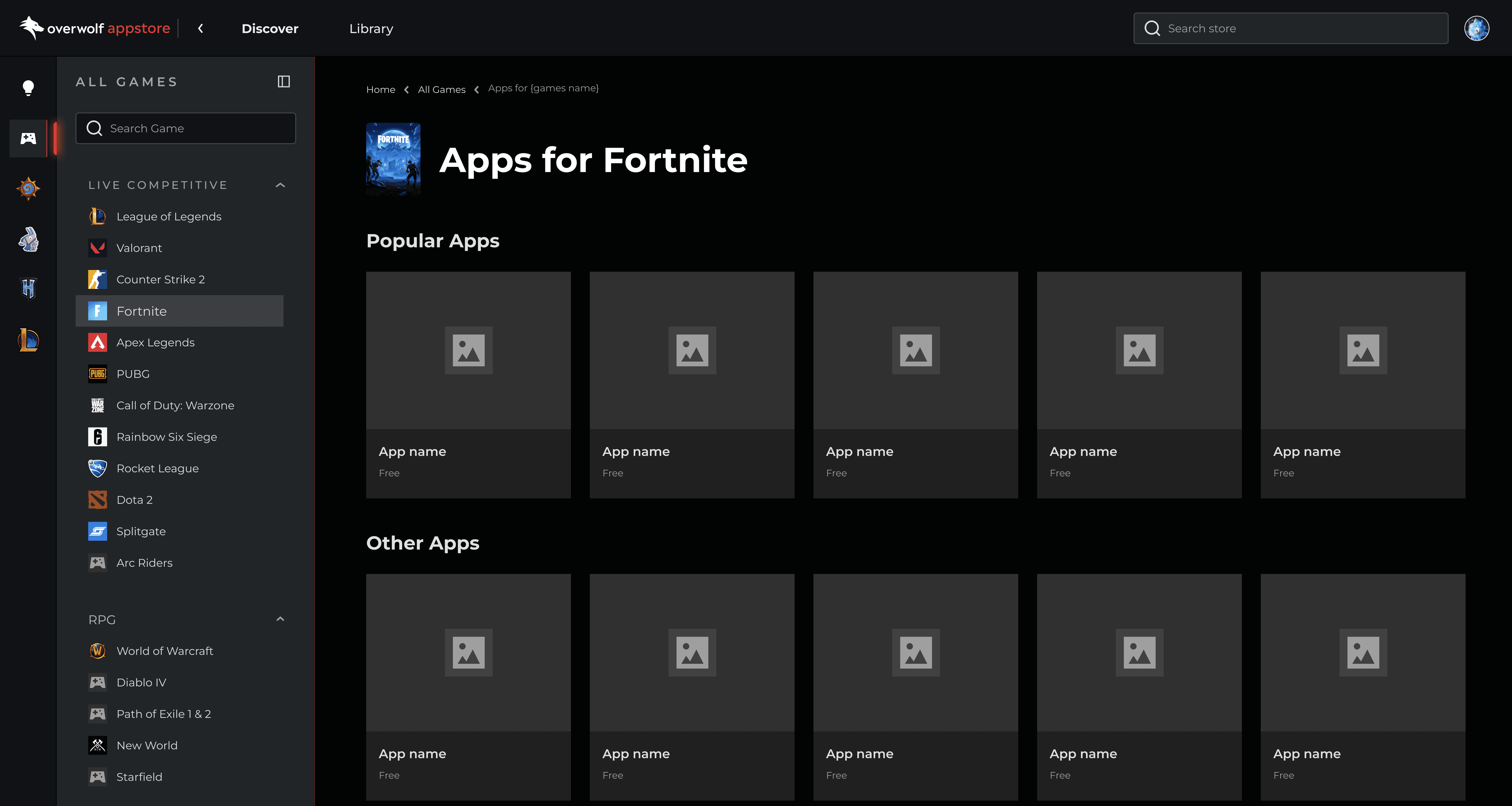
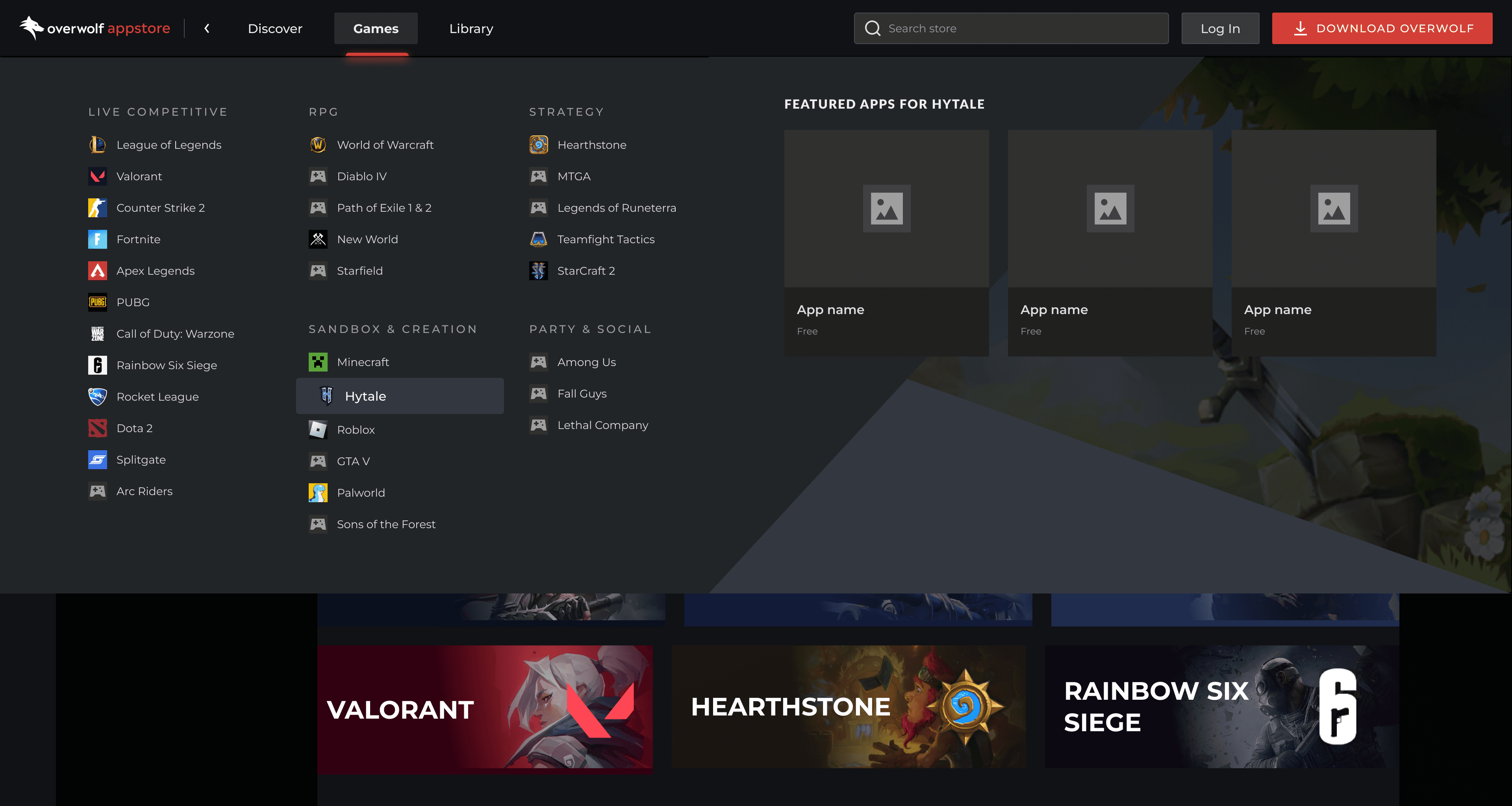
Prototype (Made with Bolt)
Outcome
Reflection
This project reinforced the importance of designing for actual user intent, not assumed engagement. While marketplaces often aim to increase browsing time, the data made it clear that gamers value relevance over exploration.
One of the key challenges was designing a system that feels personalized without requiring a massive catalog or complex algorithms. By intentionally limiting choices and anchoring discovery to installed games, the experience became more focused and confident.
If extended further, I would explore:
Smarter recommendation logic as the app ecosystem grows
Layout optimization to better explain the value of suggested apps
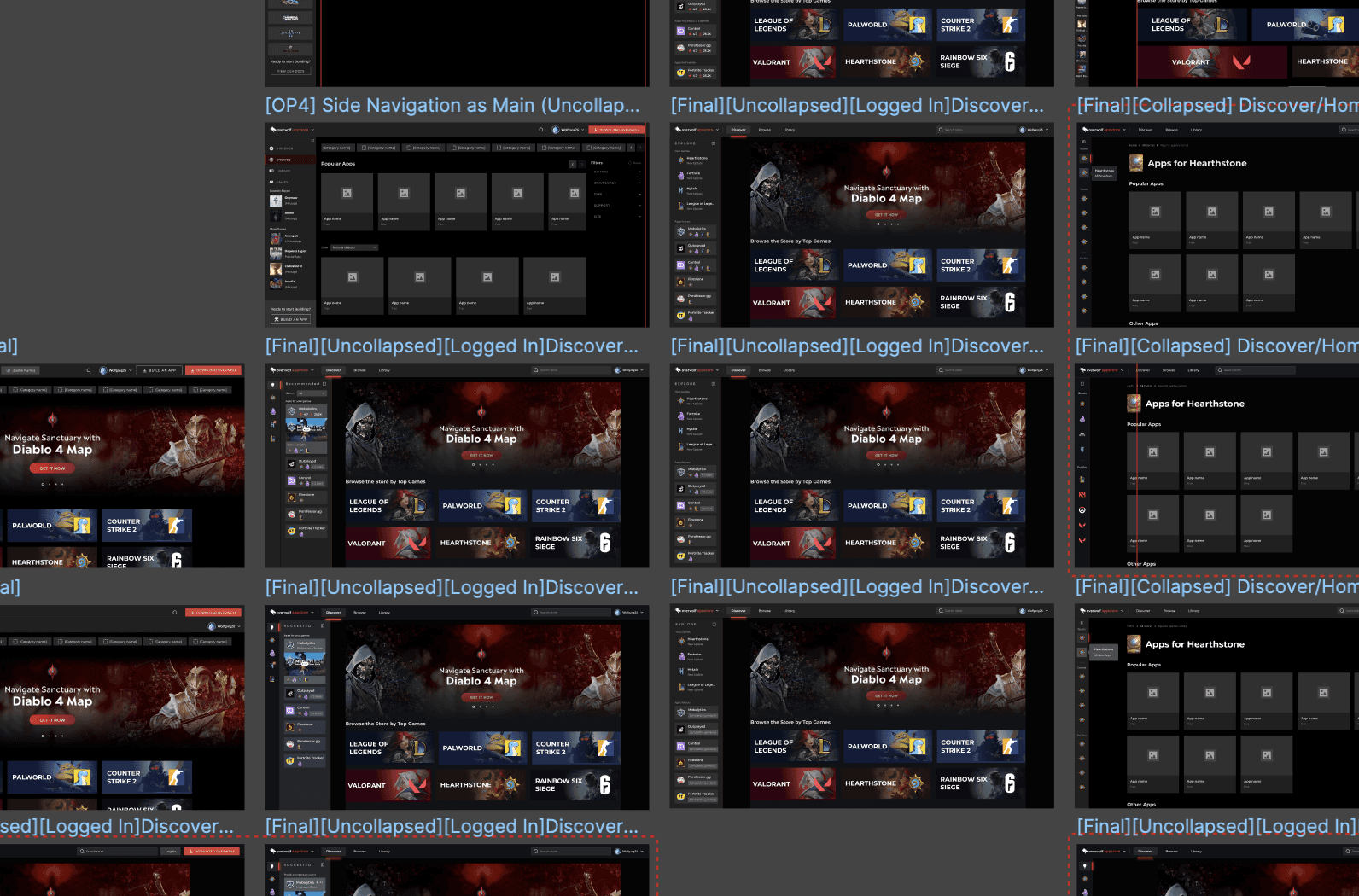
Overall, this project was a strong example of how data, UX principles, and platform constraints can converge into a clearer, more intentional product experience.
Thankyou :)
“Design is not just what it looks like and feels like. Design is how it works."
- Steve Jobs
Other Case Stuides





Hey! 🤪
This page is more fun in Desktop!
Nav. Redesign
Overwolf